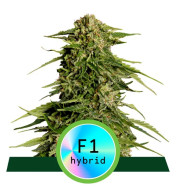
F1 hybrids are a new phenomenon in cannabis, although they’ve been known in agriculture for decades. The term F1 refers to the first generation offspring created by crossing two highly stabilized, often inbred lines. As a result, F1 seeds show so-called heterosis—the hybrid vigor effect—expressed as strong vitality, uniform growth, and above-average yields. Unlike classic polyhybrids, which can show significant differences between plants, F1 hybrids are exceptionally consistent; each plant displays the same traits in height, structure, and flavor profile.
In cannabis, F1 hybrids have appeared recently thanks to a few major seed banks working to stabilize parental lines. Producing F1 seeds requires many seasons of selection and breeding to create two fully homozygous lines. Only then does crossing those lines produce seeds with an almost identical genotype. For growers, this means a single tent can be filled with plants that grow like clones, making training (e.g., SCROG), light setup, and feeding easier. F1 seeds are popular in large commercial grows where consistency and efficiency matter.
The benefits of using F1 are numerous. First, plants grow faster and have greater resistance to environmental stress. Second, yields are significantly higher, with denser flowers heavily frosted with trichomes. Third, F1 hybrids show high cannabinoid potential and a complex terpene profile, translating into strong aroma and effects. However, keep in mind that F1 seeds are more expensive than traditional seeds, and their offspring (F2) often won’t retain the same traits—so it’s not worth cloning or breeding them further unless you have the proper parental lines.
Specific F1 hybrids are already on the market, such as F1 Titan or F1 Thunderstorm, which combine genes of classic strains (Haze, OG Kush, Skunk) with stabilized ruderalis. This makes them resilient, fast-finishing, and great-tasting. Some banks even offer F1 auto hybrids, combining uniformity and power with the short cycle of autoflower seeds. Growing F1 isn’t much different from classic cultivation: you need an airy medium, a good light (LED 600–1000 W), and regular feeding. It’s worth running plants in SOG/SCROG to fully leverage their uniform nature.
The table compares differences between classic seeds and F1:
| Feature | F1 hybrids | Classic seeds |
|---|---|---|
| Growth vigor | Very high | Varies |
| Uniformity | High (plants like clones) | Low to medium (different phenotypes) |
| Yields | Very large | Standard |
| Resistance | High | Depends on the strain |
| Price | Higher | Affordable |
F1 hybrids are a true revolution for growers who value reliability and high yields. They allow you to grow cannabis almost like vegetable crops, with confidence that every plant will look identical. If you want maximum potential and predictable results, F1 is worth considering—more expensive, but it pays back in quality.

Monday - Friday / 10:00 - 16:00
shop@ganjafarmer.co
European Union Delivery
+48 731 111 420
Ganja Farmer - Seedshop since 2009
Please be informed that the Cannabis seeds sold on this web site are specifically for collector’s purposes. Please check your local laws before making a purchase here.

 @ganjafarmer.seed
 @GanjaFarmerSeed